What is wrong with our democracy? It is missing us
From kitchen tables to citizens’ assemblies: democracy – like climate action – begins with creating spaces where people can think, feel, and act together.

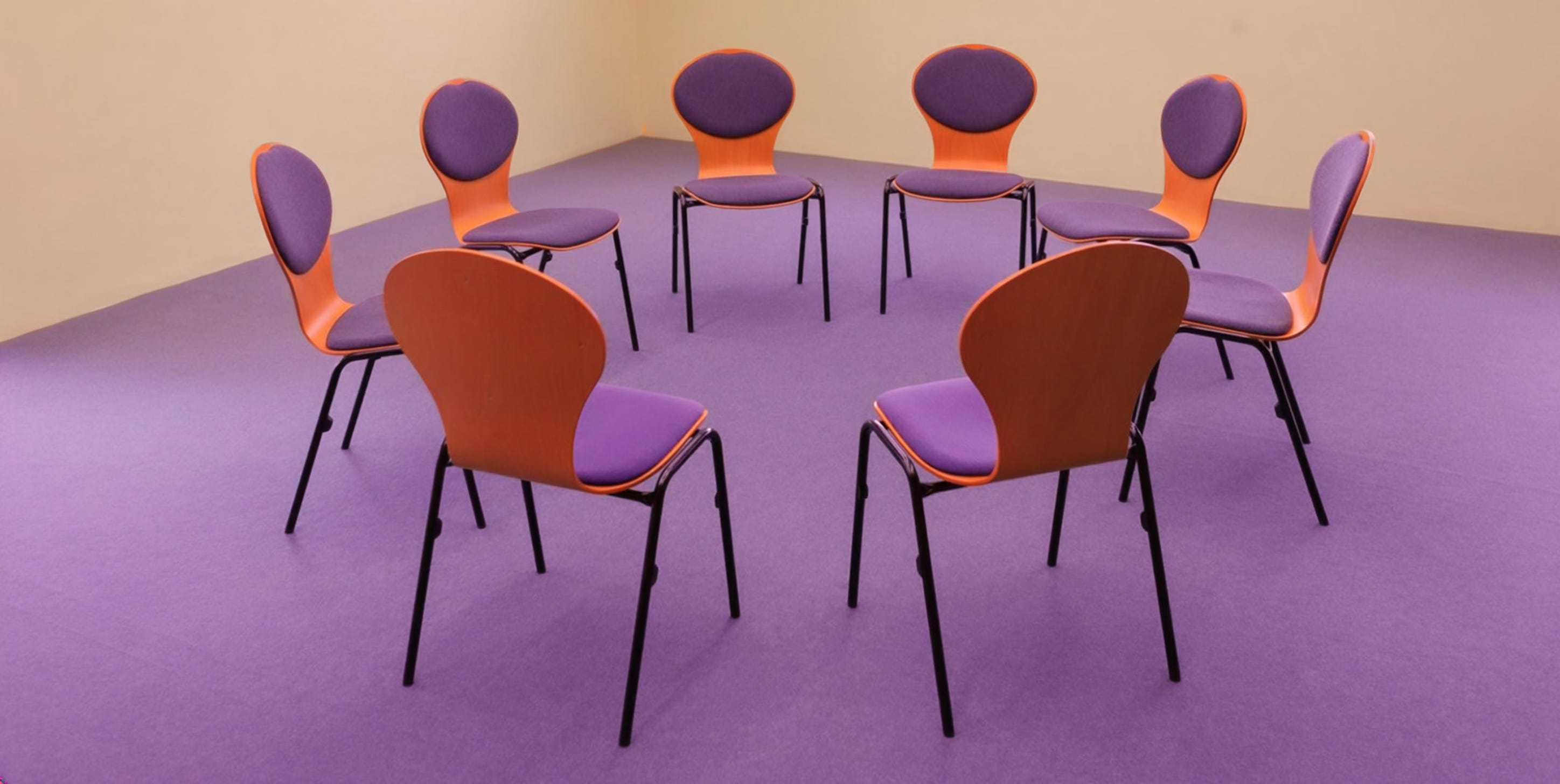
Here is something that could become the project of your life – in one sentence: to help rebuild trust, meaning, and participation through shared spaces and lived experience.
You do not have to start it. It has already begun. Or rather: it will be launched on 9 May 2026.
It is called The Democracy Project.
And you can join it.
. . .
The Democracy Project is about bringing people back into democracy – not just as voters, but as participants. It’s about creating spaces where ordinary people can think together, influence decisions, and rebuild trust in how society is run.
What this project challenges is not just our current political structures, but that deeper assumption many of us have… that democracy is something done for us, somewhere else, by someone else.
I speak with people in my neighbourhood. Tradies passing by, shop and café owners, dog owners in the park, and my neighbours. I ask them questions about politics. For most of them, democracy has not only become distant. Many talk about the system as corrupt, bought by “the big end of town” – energy, pharma and chemical companies.
Decisions feel pre-determined. Election promises are made and then forgotten. Beneath it all sits a sense that the people in power are not listening.
The response from initiatives like The Democracy Project is not to shout louder within the same system. It is to step back and ask a more fundamental question: What would democracy look like if it actually included us? Not occasionally. Not symbolically. But continuously, meaningfully, and in ways that shape decisions and create real outcomes for us, the citizens, the people on the ground.
. . .
From voting to participating
This is a shift in how we understand citizenship itself. Instead of seeing people as voters who show up every few years, what if people became participants in an ongoing process of collective thinking and decision-making?
It requires creating conditions where people can come together, not as adversaries in a debate, but as co-creators of shared understanding. Collective understanding.
It would mean slowing things down enough for listening to happen. Allowing complexity, uncertainty, and lived experience to enter the room. And importantly, it could mean rediscovering that democracy is more than a voting system. It is a culture.
. . .
A meeting point
How do we create the conditions for people to come back into relationship with each other, with reality, and with the decisions that shape their lives?
That journey begins not with arguments, but with spaces. Spaces where people can meet. Spaces where something real can be experienced. Where meaning can emerge.
If – as a result – a kind of shared understanding begins to form, that is when social energy arises, the kind that leads to action.
Thinking in “spaces” instead of in traditional methods of trying to persuade people could be where both democracy and climate action found their renewal. And if so, it also becomes highly relevant to political movements such as the Community Independents movement.
The rise of community-backed candidates across Australia has already shown that people are willing to re-engage with democracy when they feel it is grounded in real listening and local connection. Voices groups, kitchen table conversations, community forums – these are not just campaign tools. They are early forms of the very “spaces” being called for.
They demonstrate that when people are invited into genuine dialogue, something shifts. Trust begins to rebuild. Nuance returns. Ownership grows. And the distance between “the public” and “decision-making” begins to close.
In that sense, Community Independents can be seen as a practical expression of the same impulse that sits behind The Democracy Project – a move towards a more participatory, relational, and grounded democracy.
. . .
“Creating spaces” – what does it actually mean?
Creating spaces can easily remain a vague and well-meaning idea unless we make it tangible. What could it look like in practice?
It could look like small, local gatherings – cafés, living rooms, community halls – where people come together not to argue positions, but to explore questions. Spaces where facilitation matters. Where listening is as important as speaking. Where people are encouraged to reflect, not react.
It could look like citizens’ assemblies – carefully designed processes where a diverse group of people is brought together, given time, information, and support, and asked to deliberate on complex issues with the seriousness those issues deserve.
It could look like festivals and cultural events that do more than entertain. Spaces where art, music, and storytelling help translate complex realities into lived experience. Where people do not just understand something intellectually, but feel it.
It could look like radio programs, podcasts, and public broadcasters creating shared listening moments where voices are heard, perspectives are explored, and a sense of collective reflection and understanding is fostered.
It could look like schools, workplaces, and organisations adopting deliberative practices, creating internal cultures where decisions are shaped through dialogue rather than imposed from above.
And it could look like hybrid spaces that combine all of the above – where civic, cultural, and social dimensions meet.
. . .
A shared direction of travel
What connects all of these is not the format, but the intention: to create conditions where people can encounter each other as human beings. To allow meaning to emerge, rather than be dictated. To build a sense of shared reality.
From there, something begins to change. People start to see themselves not as isolated individuals, but as part of a collective story. Motivation becomes less about obligation and more about care. Action becomes something obvious and natural.
This cannot be rushed. But it is how culture shifts.
Seen in this light, The Democracy Project and the emerging evolution of the climate movement are not separate efforts. They are both part of the same broader transition. A move away from extraction – of resources, of attention, and trust. And a move towards regeneration – of relationships, meaning, and participation.
From persuasion to connection. From information to experience. From representation alone to participation.
The question is not whether these ideas have merit. The question is how intentionally we begin to bring them together. Because in that intersection – between democracy and lived experience, between civic structures and cultural spaces – something new is trying to take shape. And – from what I can see – it already is.
So I’ll leave you with a question:
If you were to create one ‘space’ in your local community, what would it look like?
See you on 9 May in Melbourne Town Hall? Tickets are already selling out quickly.