

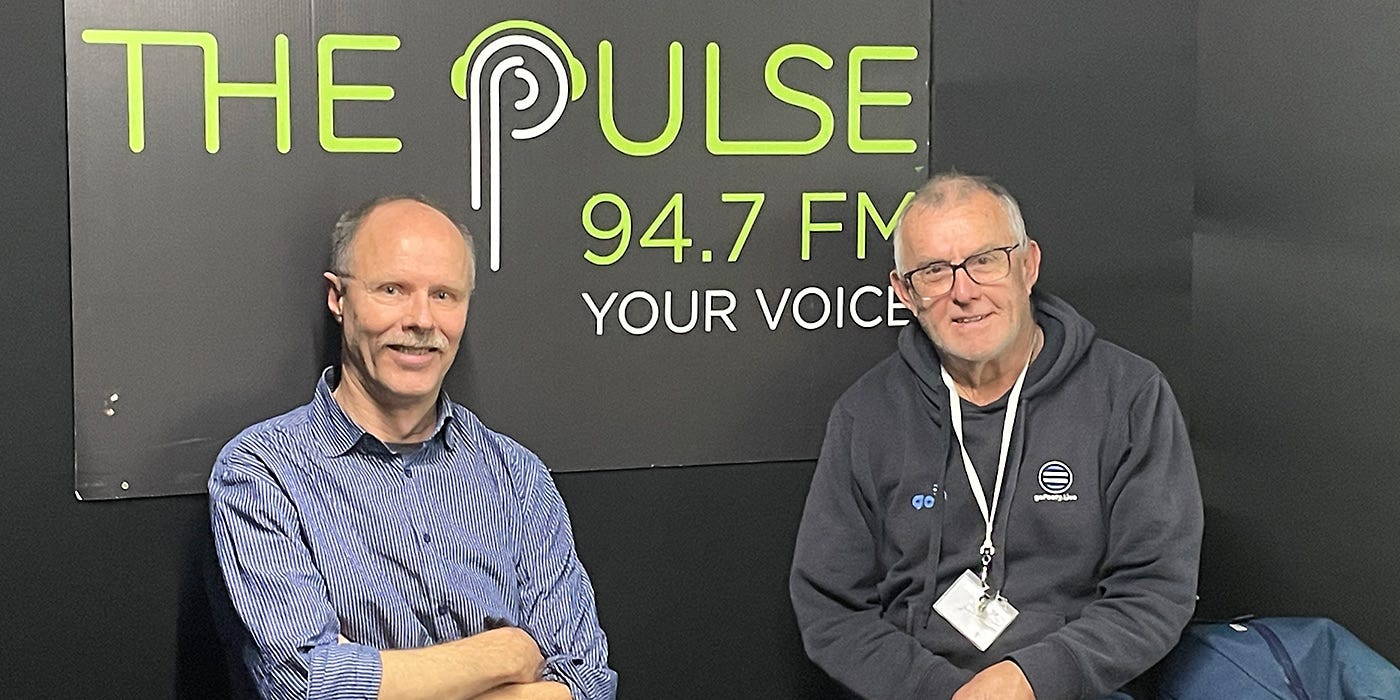
Mik and Rob
On Wednesday morning, I was sitting in the studio at 94.7 The Pulse in Geelong, waiting for The Sustainable Hour to begin.
The programme before ours is called Wednesday Front Page. Its host, Rob Cameron, had invited me to join him and his guest, Alison McDowell, for the final half hour.
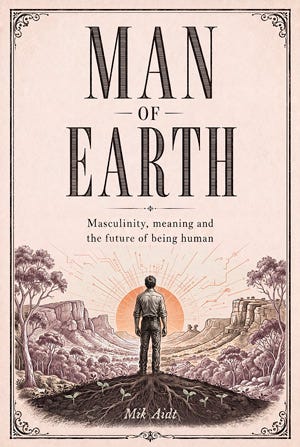
We were going to talk about my new book, Man of Earth. And we did. But somewhere along the way, the conversation became about something else as well.
Rob began by asking why I had written the book, and suddenly I found myself talking about one of the most difficult periods of my life.
Seven years ago, my then wife walked into the kitchen and told me she wanted a divorce. It was non-negotiable, she said.
I hadn’t seen that coming.
I knew our marriage wasn’t going particularly well, but somewhere inside me there was still this old assumption: we were married, therefore we had a contract for life.
Then everything began falling apart, and what followed was painful, complicated and, at times, deeply bitter. Lawyers became involved. Conflict hardened. I became increasingly angry and backed into a corner.
Eventually I reached a place that is difficult for me to admit publicly. I began to understand rage. Not intellectually. I could feel it. I understood how a man could reach a point where he feels completely betrayed and alone. Where it seems that not only his partner has turned against him, but the system has turned against him, the world itself has turned against him.
That doesn’t justify what anyone does next. But if we genuinely want to prevent violence, suicide and destruction, we need to understand what happens before a man reaches that edge.
At the edge, a man may see only two ways forward. One turns inward: end the misery and shame by ending your own life. The other turns outward: anger becomes revenge. Something has to burn. Someone has to pay.
My lawyer was concerned for me. He sensed that I was in danger of going down one of these two paths. I assured him that wasn’t going to happen. It wasn’t. But I felt that level of darkness and bitter humiliation, and I could understand how it might lead some men to do horrendous things.
A turning point came when a friend reminded me of a saying often attributed to the Chinese philosopher Confucius: “When you hate someone, they have defeated you.”
Eventually I started asking different questions. What had gone wrong? What had I failed to understand? What could I have done differently?
And then the question widened. Why do we hear about domestic violence and murders almost every week in this country? What do the statistics say? What is happening to men?
My writing of Man of Earth didn’t begin with my divorce. The first seed was planted through my work on climate and sustainability. About a year ago I interviewed British sustainability consultant Joseph Gelfer, who told me something that stayed with me:
“If you’re not in service to life on Earth, you don’t deserve to be in business.”
Those words followed me around.
. . .
In service to life
I began noticing something I had seen hundreds of times without really thinking about it. I would attend a community meeting about climate change, sustainability, local resilience or protecting nature. Eight women might be sitting around the table. Two men. And I would be one of those two men.
Why did care for community and the future appear to attract so many more women than men? Why did the language of protecting, nurturing and restoring life seem to sit more comfortably with women?
And if men weren’t showing up in those spaces, where were they?
That question eventually became one of the threads running through Man of Earth. It led me into history, biology, patriarchy, relationships, sexuality, feminism, ecology and the strange cultural moment men now find themselves in.
Because something profound has changed. The old script is disappearing.
Rob and I grew up with very different backgrounds. I grew up in Denmark, in a small village, in what felt like a remarkably safe corner of the world. Rob grew up in Australia. Yet we both inherited versions of the same basic story about men.
The man worked. The man provided. The woman looked after the children and the home.
Then, in the 1970s, came a social revolution. Women demanded equality, independence, education, careers, economic freedom and control over their own lives and bodies.
In my own childhood, my parents were remarkably equal. Still, it was my father who taught me how to repair things and fix a punctured bicycle tyre, while it was my mother who taught me how to cook and set the table.
The broader cultural script was still there, though the old masculine role was losing its authority.
The story was clear about what women should be free from. We have since then been less successful at describing what men could grow into.
Because if you take away the domination from a man, who is he?
I think that question sits underneath a surprising amount of what is happening around us today.
. . .
Who teaches a boy how to become a man?
A boy eventually reaches an age where, consciously or unconsciously, he begins asking: What does it mean to be a man? How should I behave? What makes me valuable? How should I relate to women? How should I deal with rejection? What do I do with anger? How do I earn respect? Where do I belong?
Who answers those questions?
Sometimes a father does. Sometimes a grandfather. Perhaps a school teacher or a sports coach.
Occasionally, a young man is fortunate enough to meet someone who takes him seriously and shows him another way of being.
But many boys find nobody.
And today, nobody doesn’t mean silence. Nobody means the phone in his pocket. Social media will happily answer every question he has. Its algorithms have discovered that anger, grievance, domination, sexual conquest, status and humiliation can hold attention extremely well.
There is no shortage of men online telling boys exactly what masculinity should look like: be stronger, earn more, build muscle, never appear weak, win, dominate, get the women, don’t let anybody disrespect you.
The old masculine story hasn’t disappeared at all. On the contrary, it is thriving, because it has now been repackaged, monetised and algorithmically amplified.
At precisely the moment when young men need a new story, some of the loudest voices are offering them an exaggerated version of the old one.
Which brings us back to something much more basic.
Belonging.
. . .
What happened to belonging?
During the radio conversation, I found myself thinking about childhood.
A child’s understanding of the world starts with place.
This is my house. This is my street. These are the people I know. This is my school. These are the trees I climb. These are the faces I recognise.
This is where I belong.
Yet modern life can make that kind of rootedness difficult.
Houses are sold for profit. Families move. Parents work long hours. Children move between childcare, school, activities and different households. Neighbours constantly change. Teenagers spend more time in digital spaces whose inhabitants may live thousands of kilometres away.
None of these things automatically creates harm. But belonging matters. Human beings need the feeling that there is somewhere they fit. Somewhere they are known. Somewhere their presence matters.
I will argue that this need is particularly important when we talk about boys and young men. Because if you don’t belong somewhere, you become vulnerable to anyone who offers you membership.
A gang can provide belonging. An extremist group can provide belonging. An online masculinity tribe can provide belonging. Shared hatred can create belonging.
Suddenly there is a ‘we’ – and a ‘them’.
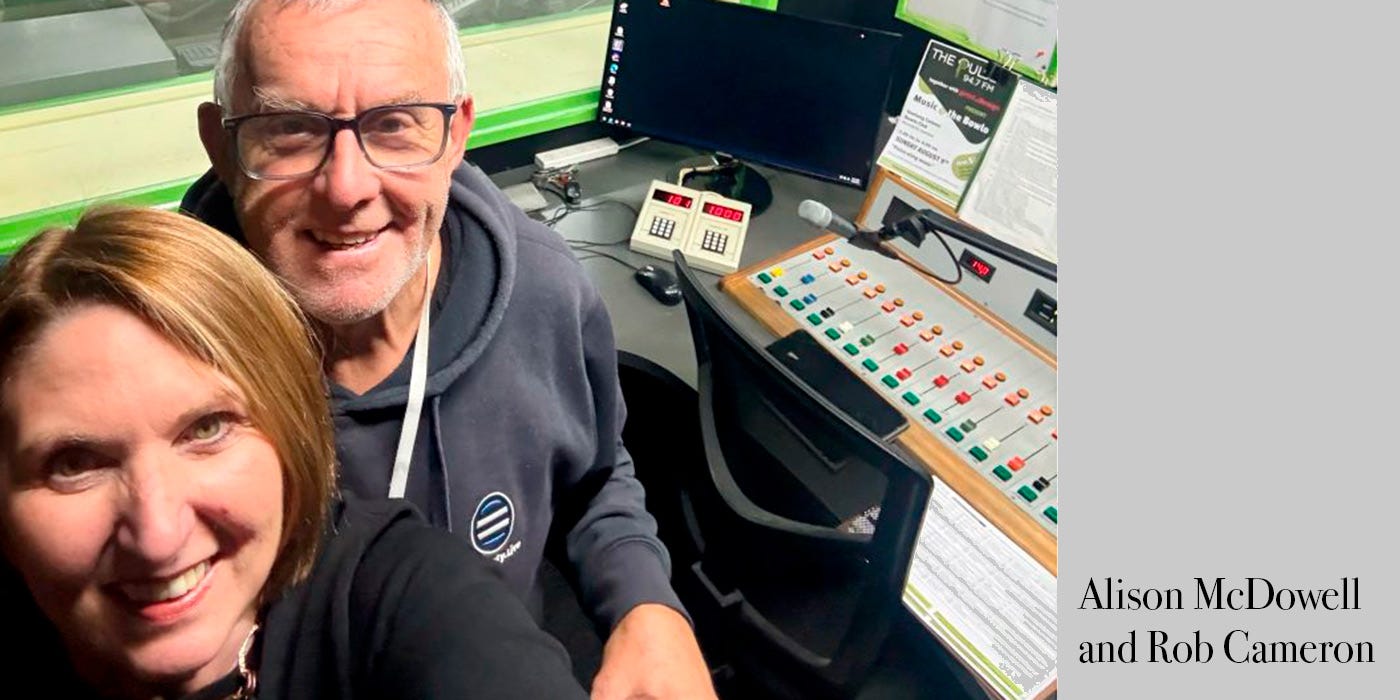
Then Alison said something that changed the direction of our whole conversation.
She had been talking about her experience working in male-dominated environments and how difficult it had been to establish herself. She spoke about respect. About listening. About recognising the expertise of the men around her rather than entering the room assuming that respect could only travel in one direction.
She recalled something she had heard at a seminar at Swinburne University:
“When you belong, you become.”
When people feel safe, they change. When they feel respected, they contribute. When they know they belong, they don’t need to spend so much energy proving that they deserve to be there. They become more generous, more curious, more willing to listen, more willing to be challenged and more capable of becoming themselves.
Perhaps one of the problems with our current conversation about men is that we spend a great deal of time telling men what they should stop being.
Don’t dominate. Don’t suppress your emotions. Don’t behave like your grandfather. Don’t expect women to serve you.
Much of that criticism is justified. But human beings cannot build an identity around a list of prohibitions. Eventually someone has to answer the positive question:
What could a man become?
. . .
The gentle man
While writing Man of Earth, I found myself returning to an old word: gentleman.
The word carries baggage. For some, it conjures up aristocracy, privilege or an old men’s club where women were excluded.
But one day I looked at the word differently. What if we separated the two?
Gentle man.
What would strength look like when joined with gentleness? What would masculinity look like without domination? Could gentleness itself become a form of strength?
For years, my Danish podcast partner Christian and I have had a somewhat tongue-in-cheek segment where we pretend to enter an old-fashioned gentlemen’s club. We called it The Cigar Box. It gave us permission to talk man-to-man about relationships, sex, ageing, desire, failure and the things men don’t always speak openly about.
Over time, the joke started pointing towards something serious. Perhaps we need spaces where men can talk honestly with other men, without performing, pretending to have the answers or having to win.
And perhaps we need a new understanding of the gentleman. A gentle man.
A man whose strength is measured partly by what he protects. A man who understands service.
The phrase ‘in service to life’ eventually became central to my thinking, because service requires something that our culture doesn’t always celebrate: humility.
If I am in service, I cannot constantly place myself at the centre. I have to listen. I have to pay attention. I have to ask what is needed.
And this idea of service can spread outward. Service to your partner. Your children. Your community. Generations you will never meet.
Service to the living systems that make your own existence possible.
. . .
Respect has a wider circle
Towards the end of our conversation, Alison returned to the word ‘respect’. She called it “perhaps her favourite word in the English language.”
Respect might be one of the bridges we have been looking for.
Respect between women and men. Respect between generations. Respect for difference. Respect for vulnerability. Respect for ourselves.
But the circle of respect cannot end with human beings. If we genuinely respect our children, we must also respect the world they will inherit. And if we do that, climate change stops being an abstract ‘environmental issue’. Destroying a stable climate becomes a question of relationship.
What kind of ancestor do I want to be? What kind of world am I helping create? What do my actions say about the people who come after me?
Respect for life eventually means respect for the conditions that allow life to flourish: the atmosphere, the oceans, forests, rivers, soil, other species, the strange living planet on which every human story has unfolded.
This is where the different threads meet: belonging, relationship, respect, responsibility and service.
These words may sound softer or weaker than domination, power and control. But they are not.
It takes considerably more strength to remain gentle in an angry world. More courage to admit uncertainty than to pretend you know. More maturity to repair a relationship than to win an argument. More confidence to serve than to dominate. More masculinity to protect life than to conquer it.
I entered the radio studio expecting to talk about a book.
I left thinking about five words Alison had carried into the room from somewhere else:
When you belong, you become.
That is where a new story for men begins. Before asking boys to become stronger, richer, tougher or more successful, make sure they belong.
Before asking men to change, create places where change is possible. Places where men can speak, fail, listen and be challenged. Places where they matter without having to dominate anyone.
And then perhaps the question changes. Instead of asking:
What does a real man look like?
We might ask:
What kind of man helps life flourish?
This essay grew from a conversation with Rob Cameron and Alison McDowell on Wednesday Front Page at 94.7 The Pulse in Geelong, Australia, on 5 August 2026.
Man of Earth was published by Geelong Media in August 2026. It explores masculinity, belonging, relationships and what it could mean for men to live in service to life.
Nice chat Mik. I agree that belonging is an essential part of being human. Divided we are weak. Humans have only survived by having communities. I believe that the division created in our society by the far right, social media algorithms and corporate greed today will lead to our downfall if not addressed. There are many young men who are respectful and kind and are not threatened by women but the exposure of the underlying misogyny in our society is a worry. Thanks for your courage.
Hi Mik really liked this. I think when you touch on the anger that arose in you it is revealing in general. It also gives gravitas to your journey. I know it would be painful but I do think exploring that moment would be valuable. What is the difference between the anger if women who feel misused and the system against them and men who feel this? If gender is key that is the moment if unpicked will reveal the cultural shit that leads to it. Worm greetings Inge